
Trace Former Seneca County Owners From the Newest Deed Back
Start with the newest deed on the parcel. It names a grantee and a grantor. Note the legal description, the recording date, and the book/page or instrument number as well. The grantor becomes your prior owner, provided the description matches and the instrument truly conveyed that interest. Now search that grantor as an earlier grantee. Open the acquisition deed and repeat the same steps. Working backward this way keeps an assessor name, a directory occupant, or a lucky surname match from masquerading as proof of ownership in the Seneca County property records.
| Transfer point | Grantor to grantee | Instrument to inspect | Reference to preserve |
|---|---|---|---|
| Current link | Prior owner to current owner | Newest deed | Recording date and instrument or book/page |
| Earlier link | Previous owner to later grantor | Grantor's acquisition deed | Legal description and cross-reference |
| Estate link | Estate or fiduciary to successor | Executor, administrator, or related deed | Probate authority and recording |
| Pre-1967 link | Historical grantor to grantee | Deed book and grantor-grantee index | Volume, page, names, and map clues |
Walk the Seneca County Chain Backward in I2
The County Clerk's I2 Real Property index opens the modern chain in June 1967. Begin broad. Search the current owner as Grantee and as Both. Narrow any date or deed type only after that. Then open the newest matching deed and confirm the legal description. Carry its grantor into the next search as a prior grantee. Repeat with initials, spouses, trusts, estates, and entities. Pull in corrective deeds, boundary agreements, and estate instruments when a transfer was not a simple sale in the Seneca County deed records.
- Identify the current parcel and newest deed.
- Copy the grantor exactly as indexed and as written in the image.
- Search that grantor in the grantee role for an earlier acquisition.
- Confirm the same land through the legal description.
- Continue until June 1967, then shift to historical books and indexes.
A reverse index simply finds the parties. It is the grantor or grantee arrangement within the deed records. A chain of title is the sequence of linked conveyances; a quitclaim passes whatever interest the grantor held, and a warranty-style deed carries the covenants stated in the instrument.
How Far Back Seneca County Ownership Records Go
The portal cutoff is not the whole story. The FamilySearch catalog describes deed records from 1804 through 1904. An index covering 1804 through 1967 fills the gap, filmed on 83 reels from courthouse originals. A BGSU finding aid adds Recorder deed material, general indexes, surveys, plats, tax lists, and court records. Nineteenth-century coverage overlaps across these sources. Use a book/page or party pair from the last I2-era link to enter the older index.
Seneca County itself dates to 1804. Ovid served as the first county seat. Court and county-seat functions moved to Waterloo in 1817. That shift explains why an early court, partition, or tax record in the Seneca County property records might carry an Ovid reference. No source documents a fire destroying them wholesale. Treat a missing link as a reason to vary spellings and search estate, partition, and archive material rather than invent a disaster.
Online cutoff. I2 starts in June 1967; older former owners continue through deed books, microfilm, historical indexes, and archive requests.
Estate, Partition, and Foreclosure Transfers Break a Simple Owner List
Death reshapes a chain. A deceased owner may be followed by an estate, executor, administrator, trustee, beneficiary, or purchaser. Search those names. Surrogate's Court records show the authority. I2 carries categories for executor certificates, letters testamentary, wills, trusts, death certificates, transfer-on-death documents, affidavits, and estate-tax releases. The recorded deed or qualifying instrument completes the land-record link in the Seneca County property records.
Partition and foreclosure complicate things too. Both can generate court orders, a lis pendens, referee papers, sale notices, and a later deed. Search eCourts or NYSCEF alongside the County Clerk. A filed complaint or planned sale never transfers ownership, so find the judgment, the disposition, and the recorded conveyance before adding a former owner to the deed chain.
Historic Maps Translate Old Seneca County Addresses
Old maps solve old addresses. The county collection holds nineteenth-century sheets for Waterloo, Ovid, Seneca Falls, and other towns and villages. They place owner labels, roads, mills, and vanished settlements. Interlaken shows how much names drift. It was Farmerville, then Farmer, then Farmer Village, and Lodi Street became West Avenue. Search both old and modern terms, but prove continuity through the parcel and deed description. The official Interlaken history keeps those clues handy.
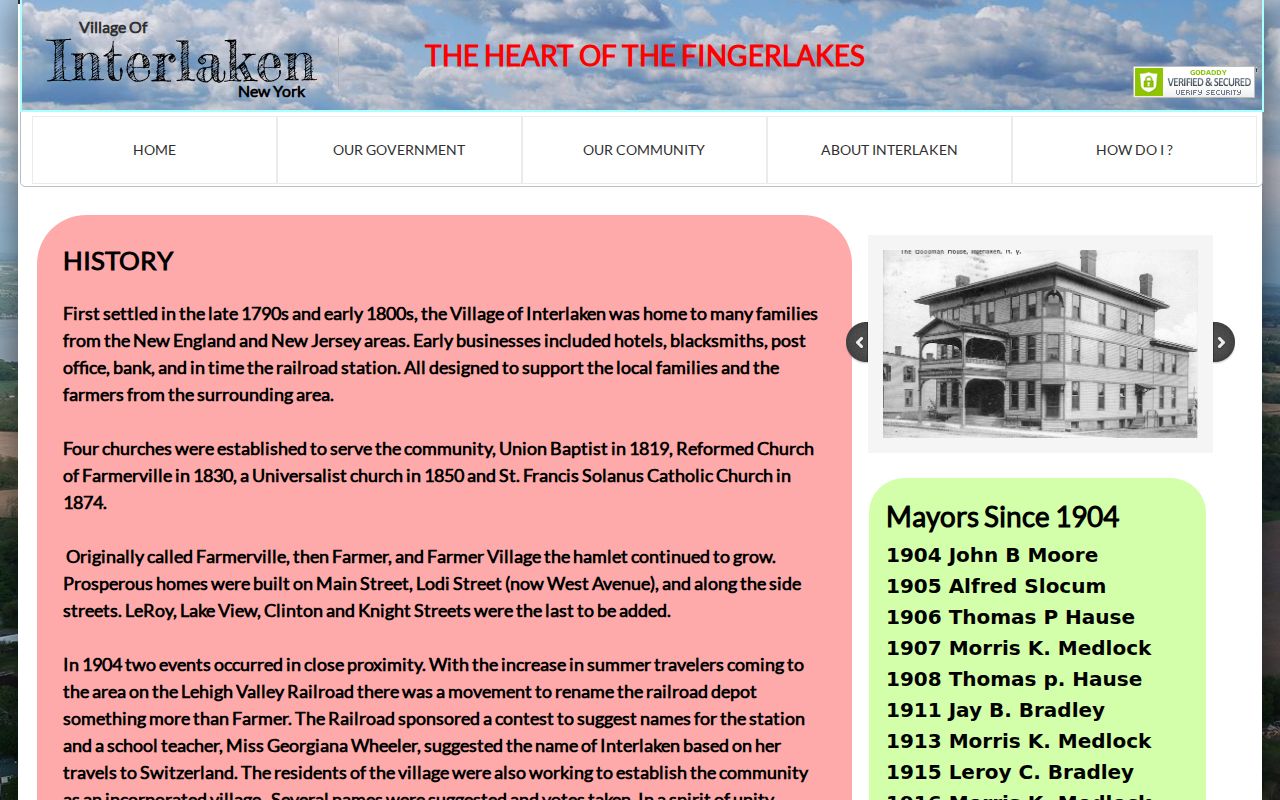
The old names unlock records a modern search misses.
Directories Add Occupants and Uses to a Seneca County Chain
Directories round out a chain with people. NY Heritage describes a 53-item Seneca County directory collection. It includes Waterloo and Seneca Falls material. The Seneca Falls Library holds directories, Sanborn maps, and newspaper scrapbooks. It also keeps county and church histories and HeritageQuest. A directory entry may note a spouse or occupation. It can also list an employer, business address, or street address. Compare adjacent years for renumbering or use changes. Remember that an occupant, shopkeeper, or employer was not necessarily the owner of record.
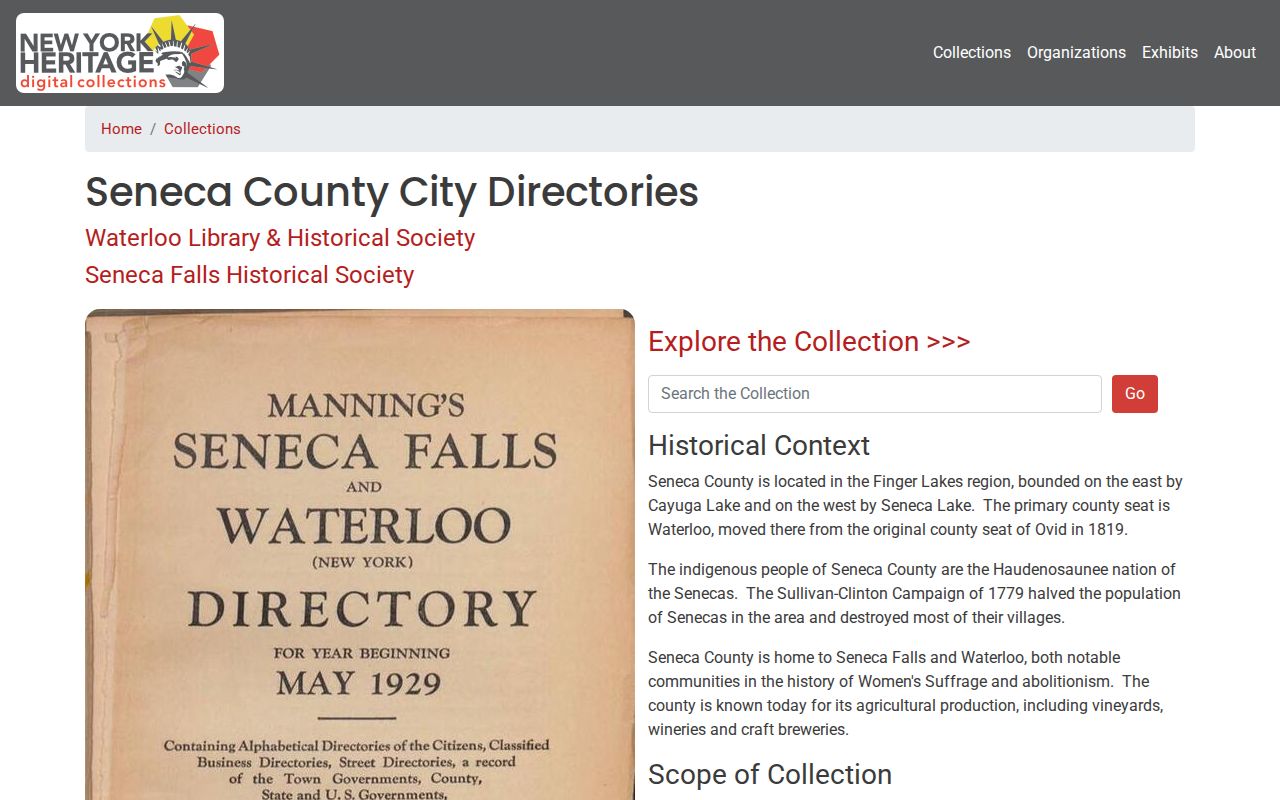
Pair every directory hit with a deed. Add the tax record too before placing the person in the Seneca County ownership chain, and use the Seneca Falls Library local-history page as a second archive route.
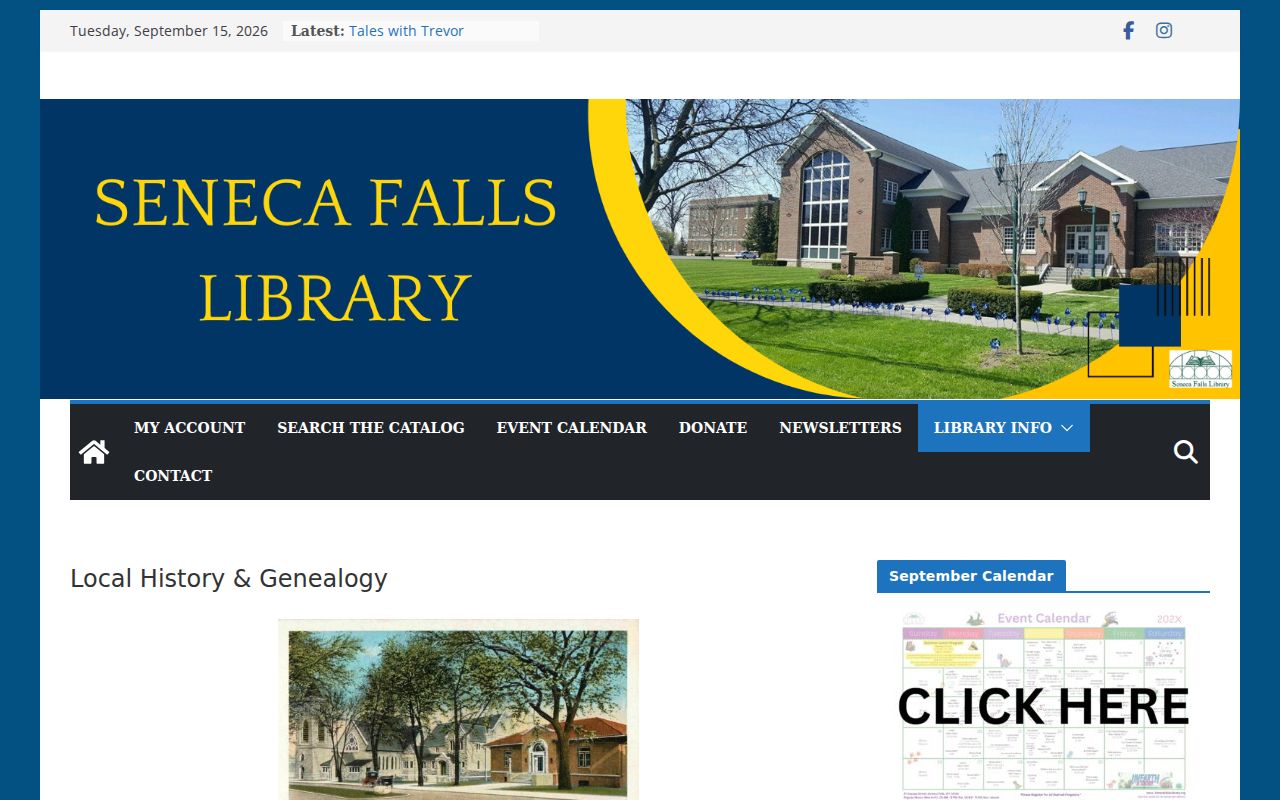
Maps and newspapers show use; the deed shows ownership.
Separate a Former Owner From a Same-Name Person
Two property-linked identifiers, at minimum, separate a true former owner from someone who merely shares a name. Compare the deed description and the parcel number. Also compare a spouse or co-owner, mailing and situs addresses, neighboring-owner calls, mortgage references, and the recording sequence. Seneca County deed records reward this care. Entities should be searched under their full legal name. Check the New York Department of State source for spelling and status. A registered agent's service address never makes that agent a former owner.
Names shift for many reasons. Marriage, estate administration, trust restatement, and business conversion all disguise the same person. So does plain index variation. Search initials and abbreviations too. Try alternate punctuation, "estate of" wording, trustee phrasing, and both party roles. Keep a written search log. That way one missing spelling cannot become an unsupported claim that the chain ends.
When the Seneca County Ownership Chain Has a Gap
Recheck the basics first. Confirm the description, date range, party role, spelling, and image cross-references. Hunt for corrective deeds, quitclaims, executor deeds, and partition files. Check for tax or foreclosure conveyances and parcel splits. Then widen the Seneca County property search from I2 to FamilySearch, the Clerk's older indexes, BGSU holdings, the County Historian, county maps, and library sources. New York FOIL can reach agency records that are not posted. An agency need not create a chain analysis for you, though.
Document the gap instead of inventing a plausible story. A historic fire in Interlaken may affect a building history. Seneca County has no established county land-record fire. A missing image may simply reflect portal coverage rather than a missing filing. The Seneca County deed records page covers copy and instrument mechanics. This page stays focused on prior owners and time depth.
Keep a Seneca County Former-Owner Chain Worksheet
Build the worksheet one row per transfer. Record the date, grantor, grantee, and deed type. Add the book/page or instrument number and a short description match. Add a source column for I2, deed book, microfilm, archive, or court file. The chain may cross a parcel split. List the parent and successor identifiers side by side. A later reviewer can then see why the description changed.
Treat directory, map, newspaper, and tax-list names as context only. A conveyance must confirm them. Record estate and partition links separately. The person in a court file may not be the final grantee. A date range or index volume may be searched with no result. Log that negative search in the worksheet too. It prevents repeated digging through the Seneca County tax roll and indexes. It also helps staff suggest another spelling or record series.
The worksheet eventually reaches the county's 1804 formation. At that point, ask whether an earlier land trail belongs in Cayuga County. Authoritative history may instead identify another predecessor jurisdiction for the search. Modern Seneca County boundaries cannot be projected backward without evidence. Record the jurisdiction and source year with the same care given each deed-book reference.
Cite the image or page where each prior transfer appears. An index citation alone may hide exceptions, multiple tracts, or a signer's legal capacity. The full instrument citation keeps the chain auditable. It also stops an abbreviated index label from hardening. That label should not become the final historical claim about the parcel.