
Document a Seneca County Owner Finding
A documented owner finding is reproducible. Save the parcel number, municipality, roll year, and owner wording. Record the deed reference, recording date, and search date as well. When the owner is an entity or estate, record that exact capacity. Do not swap in a person's name. A concise source log shows where a later update may have occurred.
Gaps have straightforward fixes. If a web image is missing, request the indexed document from the Clerk. If the parcel card is unavailable, ask the assessor for the current roll entry. Report an unresolved mismatch as a mismatch. That is not proof that either custodian is wrong.
How to Identify Who Owns Seneca County Property
Start with the physical address. The county-linked Beacon search identifies the parcel. Save the tax-map number, owner field, municipality, situs, mailing address, and roll year. Then search that owner as a grantee in the County Clerk's I2 Real Property index. Compare the newest deed's legal description with the parcel. This two-source route through Seneca County property records separates the administrative snapshot from the recorded conveyance. That deed confirms the most recent transfer.
- Verify the address and find the parcel in Beacon.
- Copy the owner field and exact parcel identifier.
- Search that owner as Grantee and Both in I2.
- Open the newest matching deed and compare descriptions.
- Ask the assessor and Clerk to explain a date or name mismatch.
Where Seneca County Property Ownership Appears
Different public records show ownership from different administrative angles. Use the source that answers the specific question, and date the result.
| Ownership source | What it gives | How current it may be |
|---|---|---|
| Assessment roll or parcel card | Owner field, mailing, situs, parcel number, roll year, and values | An administrative snapshot that can lag a recent transfer |
| County Clerk deed index | Grantor, grantee, document type, recording date, and instrument reference | Current through the portal's certified date for recorded filings |
| Deed image | Full parties, legal description, reservations, and signatures or acknowledgments | The content of that particular recorded instrument |
| Tax map | Parcel context and administrative identifier | Useful for matching land, not proving title |
Owner of record means the owner named in a specified official record. The grantee receives the interest in a deed. Title is the legal ownership interest, which one tax field cannot establish. Situs and mailing address identify two different places.
Use the Seneca County Tax Owner as a Starting Point
The Real Property Tax Department links Beacon as the public assessment search. Use only the labels and fields visible when searching. The owner, primary owner, additional owner, situs, mailing address, parcel identifier, assessment year, land and improvement values, exemptions, and sale clues are all useful fields when present. Preserve the roll year, because the card can change later.
A tax name does not prove occupancy. The mailing address may belong to an owner outside Seneca County, a trust, LLC, estate, attorney, or bill service. A postal place can differ from the town or village that assesses or zones the parcel. Keep the municipal field and parcel number with the name before moving to the deed search.
Confirm Who Owns Seneca County Land in I2
The I2 portal provides Real Property name searching from June 1967 forward. Search the roll name in Both and Grantee roles. Use spelling, initials, spouse, trust, estate, and entity variants. Open the newest deed affecting the same legal description. A later quitclaim or correction may affect only part of an interest. Read the document rather than taking the last date alone. The official I2 search page shows the party-role, document-type, and date controls. Use those controls for this confirmation.
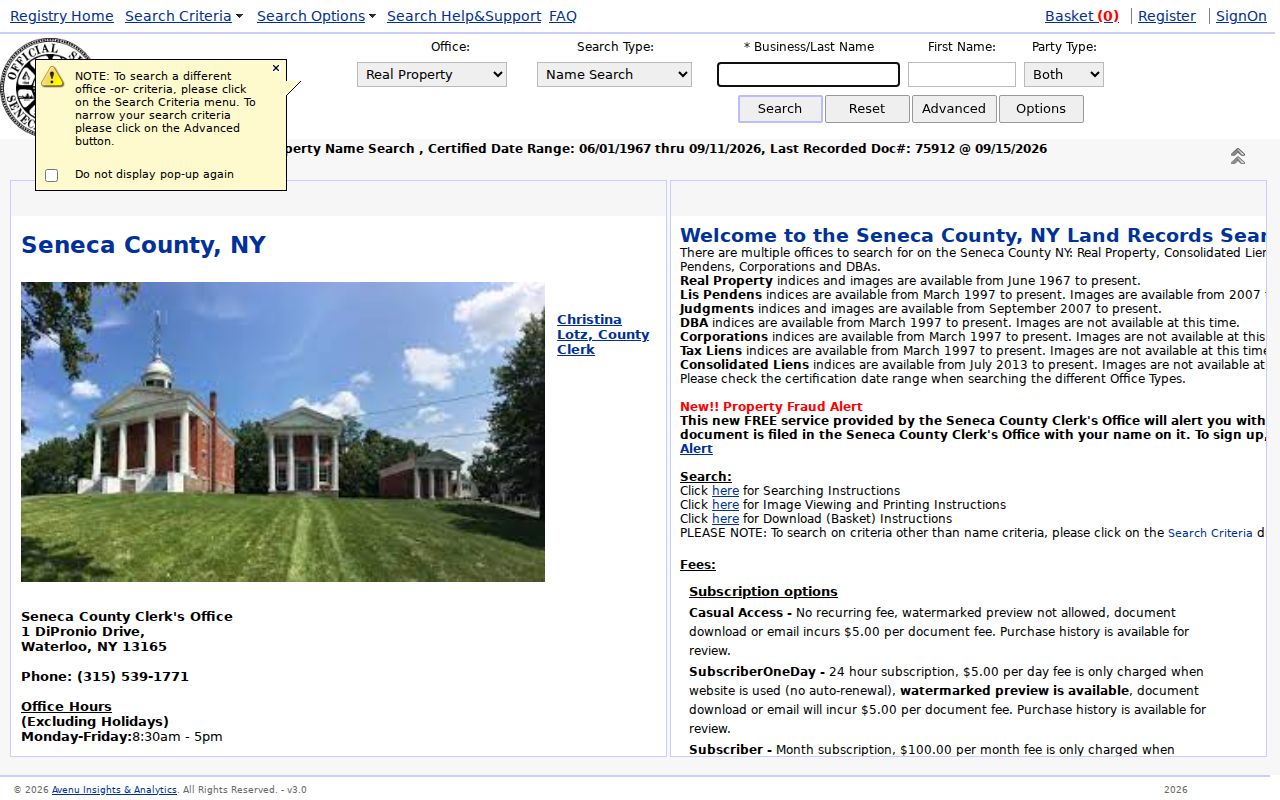
The I2 search form is only the start of an owner check. Pull the deed image and match its parcel description. When both line up, you have your answer.
Trusts, LLCs, and Estates Can Be the Seneca County Owner
If the roll or deed names a trust, search the trust name and trustee forms. Then read the recorded document for the capacity in which each person signed. If an LLC or corporation appears, search the exact entity in the New York Department of State database. Search I2's corporation or DBA office where relevant. A service-of-process address, officer, or registered agent is not automatically the beneficial owner of the real estate.
A deceased owner opens more paths. Search the estate, executor, administrator, trustee, beneficiary, and later grantee. WebSurrogate or the local court file can show probate authority. I2 includes estate-related document categories. The recorded executor, administrator, beneficiary, or other conveyance is the property link. Never substitute an obituary or directory entry for the deed.
When the Seneca County Roll Still Shows a Prior Owner
A transfer can be recorded before the next administrative update reaches the tax system. Historical county material described periodic owner-file updates. But no current source promises a fixed closing-to-roll interval. Compare the roll year, any sale date shown, and the deed recording date. Contact the responsible assessor with the parcel and instrument reference when the discrepancy persists.
A deed can also be more complex than a complete sale. It may convey a partial interest or reserve a life estate. It may correct a name or description. It may transfer land into a trust, or cover property later split into new parcels. Ask the Clerk for the instrument. Ask the assessor for the current parcel history. Do not force the records into a simple before-and-after conclusion.
Seneca County Fraud Alerts Protect the Name, Not the Title
The Seneca County Clerk offers a free Property Fraud Alert service. It watches a registered person or organization name for new filings in any participating county. When that name appears in a recorded document, an alert goes out. The service answers the risk flagged in a 2025 local warning. That warning concerned fake electronic proof used in attempted property listings. It cannot stop a document from being recorded. It also takes no position on validity. So treat an alert as a prompt to check the deed records directly with the Clerk.
The official registration source explains how enrollment works.
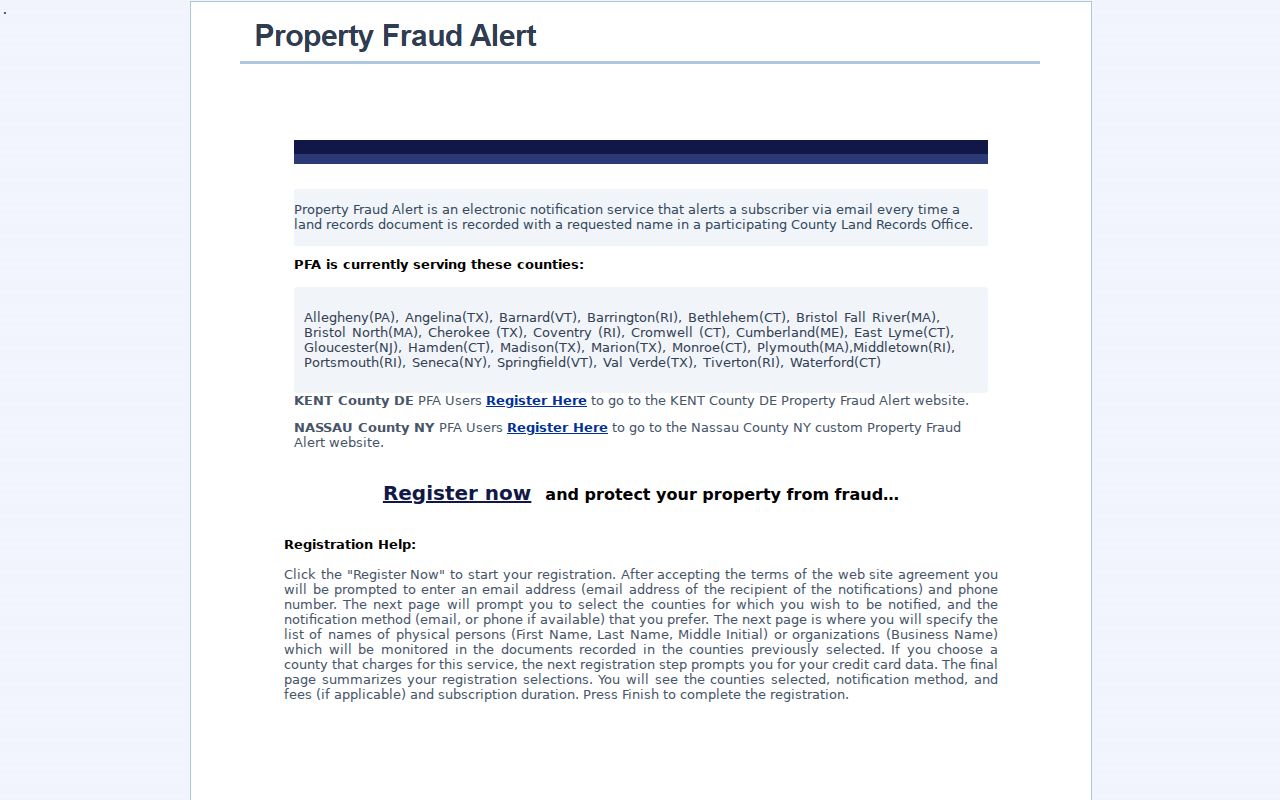
Register the names, then verify alerts directly with the Clerk.
What an Ownership Lookup Cannot Establish
An owner name on the tax roll is not a title examination. It has real limits. That name will not prove who occupies the parcel, expose every beneficial owner behind an entity, or fix an exact boundary. Nor does it confirm that all liens were released or that a permit was completed. Even a deed index entry is only a start, since the deed image and its legal description must be read too. For insurable title questions, hire a title professional. For boundary questions, use a licensed surveyor.
Respect protected information as well. New York's Address Confidentiality Program and confidential voter registration can shield an actual address, and some court files stay sealed or restricted. Never reconstruct a withheld address or republish sensitive data. For detail limited to the present roll field, the Seneca County current-owner guide is the right resource.
Lawful ownership research. Use public owner information for property diligence and civic purposes, never to harass, threaten, impersonate, or harm anyone.
The official New York voter lookup requires separate personal fields.
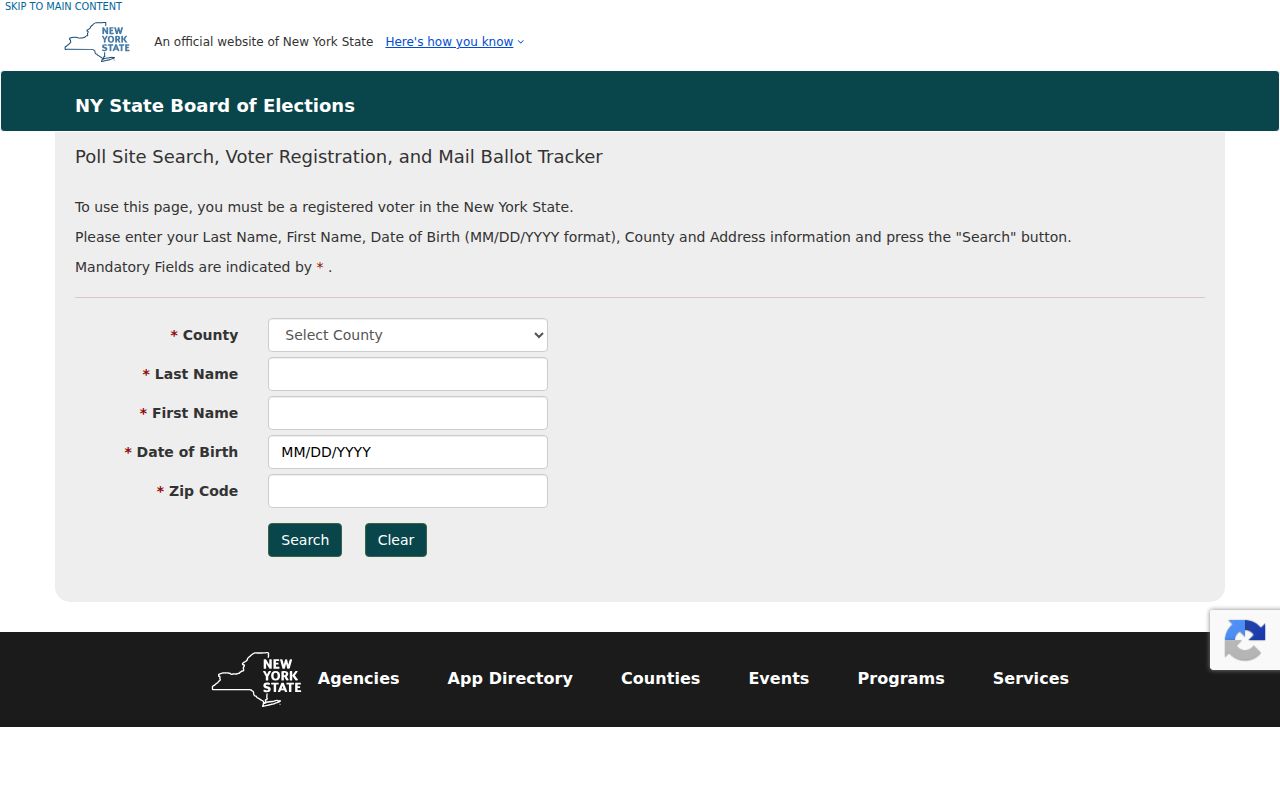
Voter rolls are not Seneca County deed records. Election-law limits and protected registrations apply, and they cannot replace assessment ownership records for Seneca County property questions.
Resolve Common Seneca County Ownership Ambiguities
Two names on the tax roll mean two owners. Do not trim the entry to the first person. Read the deed to see how the parties took their interests. Check whether a later instrument changed only one share. With a trust, preserve the trust and trustee wording. When an LLC or corporation appears, verify the entity's exact spelling and status. Do not treat an agent or service address as the landowner.
A deceased owner can stay on the roll for a while. Search estate and fiduciary forms, then turn to Surrogate's Court to learn who holds authority. A missing later deed has several explanations. Administration may be unfinished. The transfer may sit under a different indexed name, or the roll may lag behind. Report the record sequence, not a family-tree guess.
Parcel identifiers change too. Ask Real Property Tax for the predecessor and successor numbers. One deed may describe a parent tract while the current roll shows smaller parcels. The reverse happens as well, with a single new deed combining former tax parcels. Ownership is confirmed only after the land in the instrument is reconciled to the current parcel.
Last, separate an owner from a person merely connected to the site. A directory listing, permit applicant, business filing, tax mailing recipient, or court party can be a useful lead. None of them automatically holds the fee interest. The tax roll and the deed remain the core public evidence. Title professionals handle conclusions that need a full examination.
Public records have a stopping point. When ownership matters for a transaction, estate, boundary agreement, or legal notice, hand the findings to the right professional. The public workflow identifies records and their apparent sequence. It does not chase every title exception or rule on an instrument's legal effect. Keep copies and references so the professional can verify the same parcel.
Never normalize a spelling difference silently. Preserve the roll wording and the deed wording, then note the evidence that connects them. Exact transcription counts. Trusts, estates, corporate suffixes, initials, and multiple owners all turn on small details.