
Three Numbers Behind a Seneca County Property Value
Three figures drive a Seneca County property value conversation. One is the assessed value on the tax roll. Another is a market-value estimate that assessors use for analysis. The third is the consideration on a recorded deed. Because each carries its own date and purpose, save the municipality, roll year, property class, and source beside every number. Compare a current assessment against an old sale price without those anchors, and an ordinary record difference starts to look like an error.
| Value type | What it means | Where it is recorded |
|---|---|---|
| Assessed value | The local roll value used in taxation before applicable adjustments | Beacon, the assessment roll, and assessor records |
| Market value estimate | An opinion or modeled indication of likely market value as of a date | Assessment analysis, appraisal, or market evidence |
| Recorded sale consideration | The amount reported for a specific transfer, subject to transaction context | Deed and RP-5217 transfer reporting |
Look Up the Seneca County Assessed Value
The Real Property Tax Department's Beacon portal is the starting point. Search by physical address or parcel number. Record what the parcel card actually shows: owner of record, parcel identifier, municipality, assessment year, land value, improvement value, total assessed value, exemptions, and any sale fields present. Field labels vary. Trust the card in front of you. If the portal returns nothing, take the address and tax-map number to the responsible town assessor.
- Find the parcel and confirm its municipality.
- Record the roll year and land, improvement, and total values.
- Note exemptions without treating them as title or occupancy evidence.
- Check the local level of assessment or equalization context.
- Compare only similar property evidence with matching dates.
Assessed value sits on the roll. Market value is an estimate pinned to a date. The equalization rate is a town-wide ratio rather than a parcel appraisal, and consideration is the amount reported for one transfer.
Equalization Rates Are Municipal, Not Parcel-Specific
New York defines equalization as assessed value divided by market value, measured municipality by municipality. It is a town-level tool. The state survey shows the spread. Waterloo sits around 68, Seneca Falls at 100, and some south-county rows near 48 and 55.36 in the relevant columns. Those are aggregate figures. They are not parcel-level math. Use the exact town or village row, assessment year, and property class instead. A Main Street mixed-use building, a canal parcel, an industrial site, an older village house, and rural acreage can draw on very different market evidence even within one postal place. Ratios also drift over time. Cite the survey year and check current state data before making any formal valuation argument.
Recorded Sale Price Comes From the Transfer Trail
New York's RP-5217 form rides along with deed transfer reporting and captures sale and property details. The County Clerk's I2 portal holds the deeds. Search the newest deed and review whatever transfer record or assessor sale data is public. Save two dates. The sale date and the recording date can sit weeks apart, which makes two screens look inconsistent when they describe the same closing. The official RP-5217 guidance explains the form.
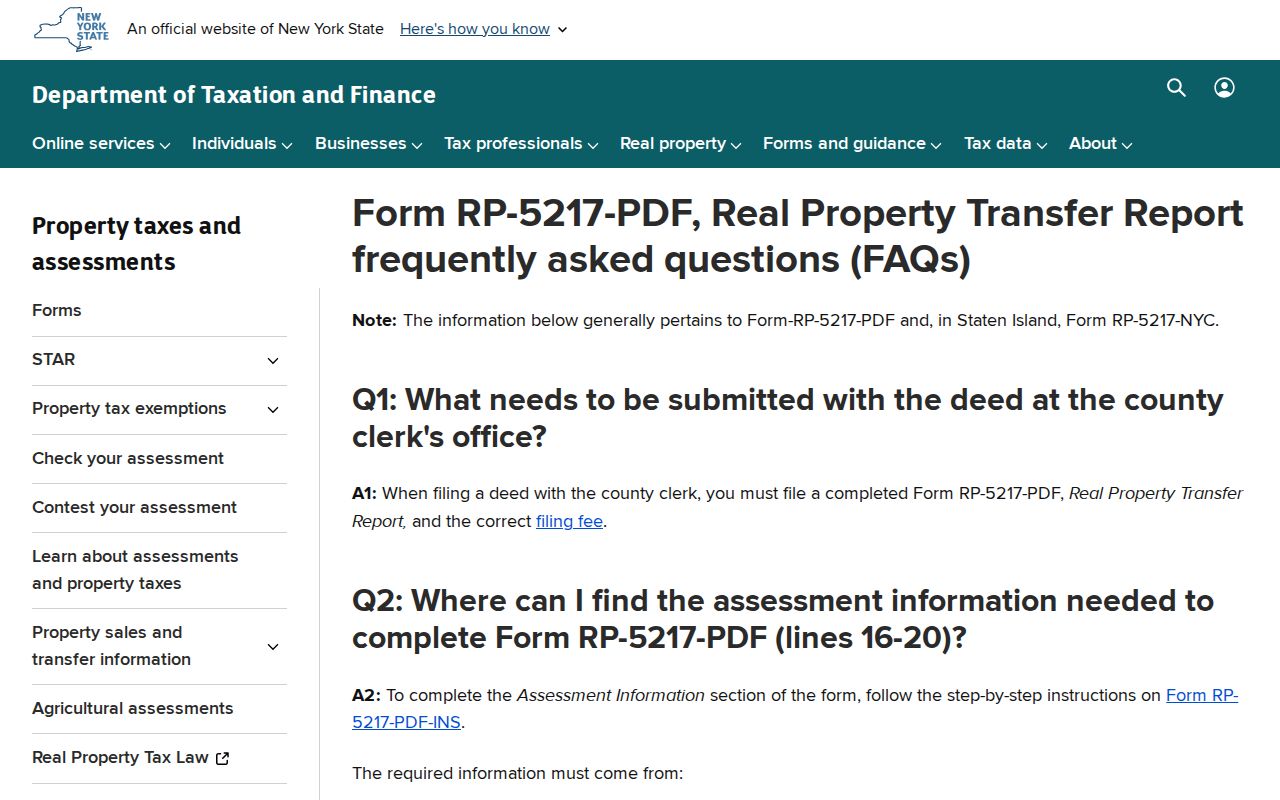
State guidance helps separate reported consideration from an assessor's current value and from the deed's recording date. Not every price is a clean comparable. Family, estate, trust, partial-interest, correction, and foreclosure transfers all carry circumstances unlike an arm's-length sale. Read the deed type first.
Land and Improvement Values Need Property Context
The land component prices the site. The improvement component covers taxable structures as the roll treats them. The total simply combines the relevant components. Neighboring totals may diverge for many reasons. The explanation may lie in lot size, use, age, condition assumptions, waterfront or access traits, mixed use, exemptions, or the assessment cycle. A gap alone proves no favoritism. Village comparisons deserve extra care. Waterloo mixes Main Street, Virginia, Oak Island, canal, river, industrial, and residential contexts. Those contexts should not be blended casually. Interlaken's older housing, former street names, and thin sales sample demand close matching. Ovid's older county-seat fabric narrows the field of comparable buildings. Always return to current property class, size, age, condition, and valuation date before trusting any pairing.
Assessment Review Is Separate From Value Interpretation
Start with the assessor. Ask the office to explain the record. Objective data errors can be corrected on request. New York's calendar generally places tentative rolls and review in May, with Grievance Day on the fourth Tuesday of that month. A formal complaint runs through Form RP-524 and the local Board of Assessment Review. Local dates can differ, so check the official grievance source for the exact current deadline.
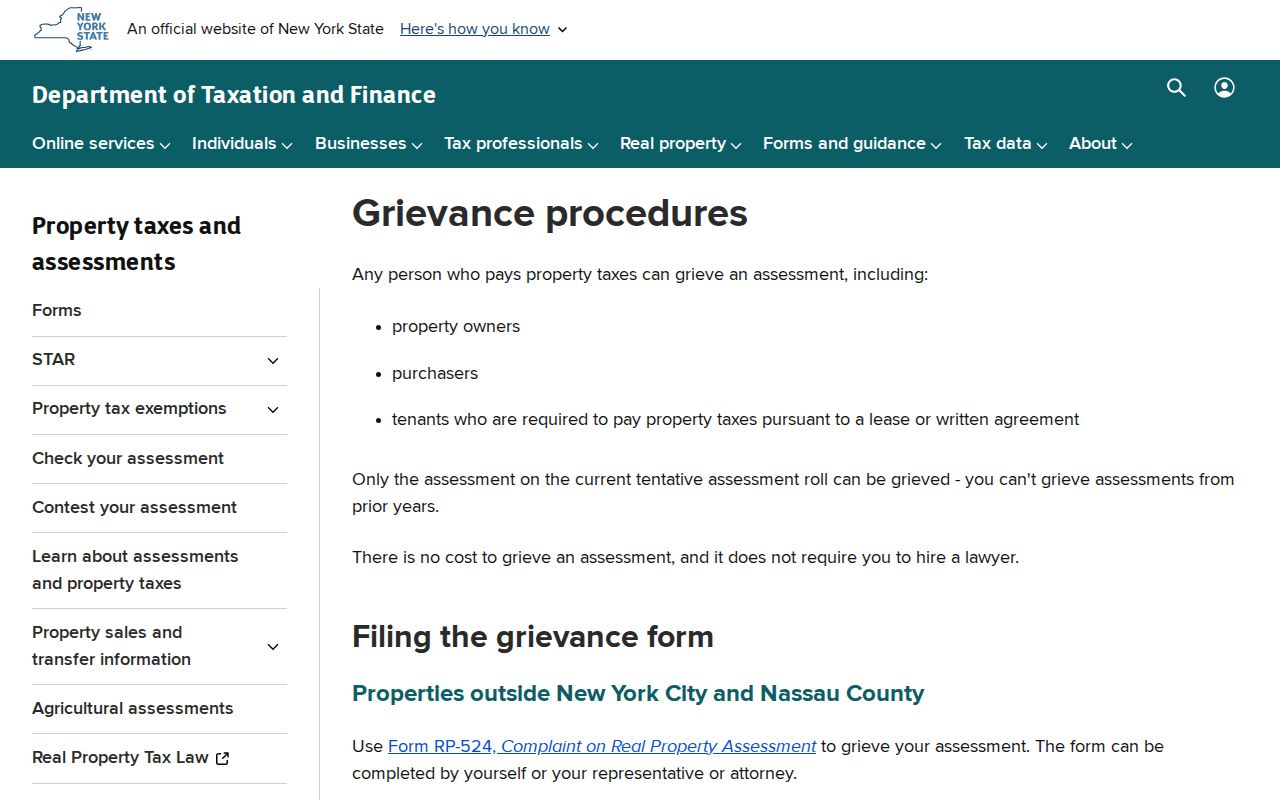
The state sets the grievance process. The local assessor controls the filing schedule. Hearing details and deadlines come from that office as well. Evidence can include comparable sales, an appraisal, photographs, and factual corrections. Relevant cost or income data is also usable. All of it is keyed to the same valuation date. For bills, exemptions, and collectors, see the Seneca County property tax records guide. It also covers the full challenge route.
Historic Sources Can Explain, but Not Price, a Seneca Property
Old maps, Sanborn plates, directories, and local histories can answer questions a tax roll never will. In Seneca County, these sources often name a former commercial occupant, a vanished street name, an addition, or a canal and rail connection tied to a parcel. A historical clue can sharpen an inspection or point toward better comparables. It cannot set a price. Before any clue enters a value narrative, pair it with the current parcel record, deed, permit file, and assessment.
Use village history with care. Interaken's official record lists fires in 1880, 1891, 1926, and 1939, yet a fire date alone never proves that a particular building burned. Waterloo's planning districts describe general use context, not a current zoning call on every parcel. Ovid's historic maps show how development spread, not how a structure stands today. Source each claim to the specific property rather than borrowing a village-wide story for one address.
What a Seneca County Property Value Does Not Tell You
An assessed value is not a promise of a sale price. A consideration figure on a recorded deed may reflect a family transfer. It is not necessarily an arm's-length deal. A nearby assessment on the same street is not a comparable. The ZIP alone does not make it one. None of these public numbers settles title. Nor does one settle condition, code compliance, environmental status, or a surveyed boundary. Professional appraisers weigh the property, the effective date, and the market. They weigh comparable evidence instead of reading one figure off a roll.
Public values still earn their keep. Use them to understand the Seneca County tax roll. Compare like records cautiously, frame questions for the assessor, and document a transfer history. State the source and date. That habit lets any reader reproduce the result.
Value limit. Seneca County assessed value supports taxation; it is not a promise of what the property would sell for and is not an appraisal.
Build a Defensible Seneca County Value Comparison
Comparing Seneca County parcels works best with discipline. Pick parcels in the same municipality and the same use. Then align the roll year and property class. Add lot size, building age, improvement type, and whatever condition evidence exists. Keep land, improvement, and total assessments separate. For each sale, record the transfer date and the recording date. Note the deed type, the consideration, and whether the circumstances look arm's length. An estate, family transfer, or partial interest can make a transaction materially different. A foreclosure or other special condition can do the same. Leave those sales out of a simple comparison.
Treat the municipal ratio as state assessment context for one year only. Waterloo's aggregate figure says nothing about Ovid or an individual parcel in Seneca Falls. Ask the assessor how the local level and valuation date apply to the subject record. Some questions demand a present market opinion. An appraiser can then inspect the property. The appraiser weighs evidence a public roll cannot capture.
Historic maps, permits, and directories belong in a supporting role. They may surface a former use or an addition. A demolition, a canal or rail link, or a mixed-use history may also emerge. Each is worth chasing down. Confirm each property-specific fact in a current official file before adjusting any comparison.
A value note should label the figure as tentative, final, historical, or current in the portal. Add the retrieval date. Keep the exemption and property-class context in place. With those labels intact, a later reader can see why a number changed without assuming either record was wrong.