
How to Search Interlaken Property Records
Because Interlaken is a village, Seneca County keeps nearly all Interlaken property records. There is no separate village recorder or assessor. Start with the modern address and parcel number in the county-linked Beacon search. Note the roll year and the owner of record before moving on. The County Clerk's I2 index then shows the latest deed transfer. This confirms what Beacon reports. For a deeper property search into older deed records, repeat the lookup under Farmerville, Farmer, and Farmer Village. Try historic street names too. When a parcel has a permit or zoning question, ask the village, town, or county office. That office holds the matching file.
- Verify the current address, ZIP, and village or town jurisdiction.
- Find the parcel and assessment record in Beacon.
- Search the current owner as grantee in I2.
- Repeat historical work under Farmerville, Farmer Village, and Lodi Street.
- Request local permits by address, parcel, project type, and date.
Where Interlaken Property Records Are Kept
Most Interlaken property records live in Seneca County offices. The Seneca County Clerk records deeds, mortgages, releases, easements, liens, and related instruments. County Real Property Tax links the current parcel source and coordinates tax-map data. The Treasurer and the village collector each handle tax bills and collections. They act at their own stage of the process. For history rather than title, the Interlaken Historical Society preserves material on South Seneca, Covert, and the village itself. The county publishes no searchable Interlaken permit database. Building, zoning, site-plan, variance, and certificate files must be requested from the responsible office.
County record custodians
Use I2 for recorded instruments and county-linked Beacon for the current parcel and assessment snapshot.
Interlaken local route
Use village, town, or county contacts for permits, zoning, tax collection, and municipal files; use the Historical Society for older place and building history.
Interlaken Streets and Historic Areas in the Records
Seneca County offers no official online subdivision register. Treat these names as street, corridor, or historical research lenses, not recorded subdivisions, unless a Clerk plat confirms otherwise.
| Interlaken area or historic name | Era or change | Record use |
|---|---|---|
| Main Street | Village commercial and civic core | Deeds, DBA records, directories, permits, and tax cards |
| Lodi Street and West Avenue | Officially documented former and current street names | Run both terms in maps, directories, deeds, and file requests |
| LeRoy Street | Named in village history | Address continuity and village-block research |
| Lake View Street | Named historic street | Map, directory, parcel, and permit matching |
| Clinton and Knight streets | Village grid named in local history | Historic occupant and current parcel reconciliation |
| Farmerville, Farmer, Farmer Village | Names used before Interlaken | Older deeds, directories, news, maps, and archive requests |
Lodi Street Became West Avenue
West Avenue has not always carried that name. The village's official history confirms that Lodi Street became West Avenue. That shift matters more than almost any other detail in Interlaken property records. Run every search under both street names. Keep the year attached to each directory or map hit. Then match the modern tax-map parcel number and deed description. That proves the chain is real. A name found at an old Lodi Street address does not by itself make that person the owner of record. It does not establish them for the West Avenue parcel today. The official Interlaken history page lays out the village's account.
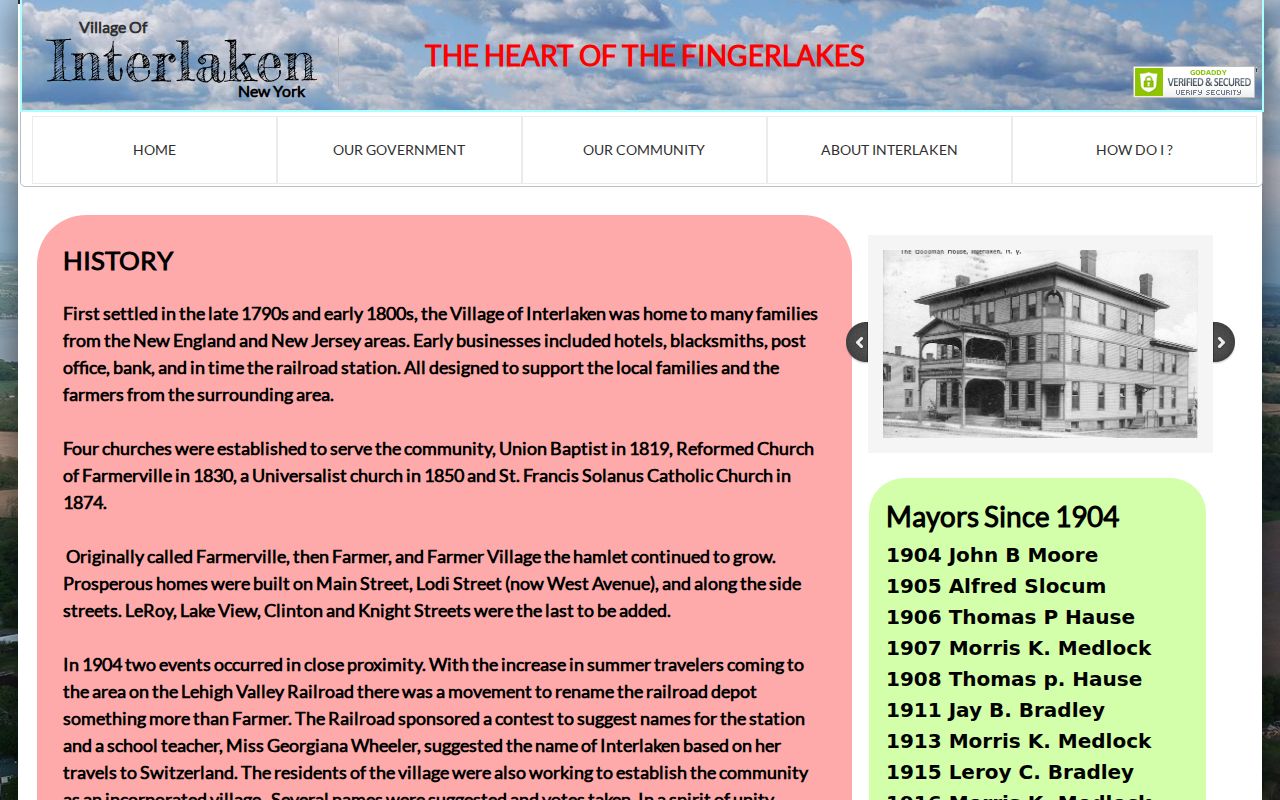
The page also lists Farmerville and Farmer Village as alternate search terms. Trying those older names can surface Seneca County property records that a modern search for West Avenue misses.
Railroad, Churches, and Village Fires Add Building Context
Interlaken's recorded history names a railroad station, four churches, and the original street grid. Each thread pulls property research somewhere useful. A railroad reference in a deed can point to rights of way, easements, access language, or old maps. Treat a rail line mentioned in a boundary call as a landmark. It is not proof of an active railroad interest. Church, business, and station records help identify who occupied a building. But only the recorded deed establishes ownership in Seneca County.
Fire shaped the village repeatedly. The history records fires in 1880, 1891, 1926, and 1939. Use those dates to dig through newspapers. Photographs, village minutes, permits, demolition evidence, and Sanborn maps can help too. Never assume a particular structure burned unless a source says so. And do not lean on the fires to explain gaps in the county deed books. Seneca County publishes no record of any land-record destruction event.
Interlaken Historical Society Extends the Property Trail
The Interlaken Historical Society holds material on South Seneca, Covert, and the village itself. A sharp request gets sharper results. Include the parcel number. Give both street names, modern and former. Add owner or occupant names, rough years, and the kind of item you want. Photographs, maps, and directories all sit within reach. So do business files, church records, railroad material, fire reports, and village minutes, ready for a well-aimed question.
The County Historian, NY Heritage directories, and the Seneca Falls Library widen the trail. They add newspapers, directory runs, Sanborn maps, county histories, and HeritageQuest. Same-name residents are a classic trap in property records. Separate them with an occupation, a spouse, an employer, or a business name. Then close the loop with the recorded deed and the assessment record. Archives tell you who lived in or used a building. Only the recorder and assessor establish ownership and valuation.
Interlaken Value Research Starts With Older Housing Context
Interlaken's housing stock is old. The 2011 Seneca County housing plan counted 184 units in the village. It put the median year built at 1902. That figure is historical context, not a current inventory. Treat it as a starting point. It is not a value estimate for any parcel today. Work from the property records instead. Compare parcels by age, use, lot size, condition, roll year, and transaction date. Draw conclusions only after that. In a village this small, one unusual sale can skew a casual comparison badly. Assessment ratios need the same care. The south-county ratios in the New York market-value survey are municipal aggregates, not parcel-level factors. Pull the actual land, improvement, and total assessment from the current card first. Confirm the correct municipality. Then compare recorded sale consideration, and only after checking whether the transfer was arm's length. A historic fire or railroad association may justify extra research. But it assigns no dollar amount by itself.
Request Interlaken Permit and Zoning Files by Parcel
Interlaken publishes no online permit search. So ask which office holds the file, and confirm whether responsibility sits with the village, the town, or Seneca County. Give the parcel number and enough detail to make the request reproducible.
| Request item | Interlaken reason |
|---|---|
| Current and former address | Connects West Avenue with Lodi Street and modern Interlaken with former names |
| Parcel or tax-map number | Distinguishes properties with similar street wording |
| Owner, applicant, and approximate date | Finds files indexed by a person or project |
| Project or record type | Targets permit, site plan, variance, subdivision, inspection, or certificate |
| Requested attachments | Seeks plans, conditions, approvals, and completion records |
A permit file proves only what it shows. It documents an application or approval step, nothing more. Request the inspection records and certificates before describing any work as completed.
Interlaken Village and ZIP Geography Are Not Parcel Proof
Interlaken sits on the official Census roster of incorporated places. The count came in at 595 residents and 335 housing units in 2020. That figure earns the village its page here. It settles nothing about parcel boundaries. ZIP 14847 is a postal label, not a jurisdiction line. A house can carry an Interlaken mailing address yet sit on a tax parcel routed to another municipality. The municipality on the current parcel record always wins.
The Census roster page lists Waterloo, Interlaken, and Ovid together.
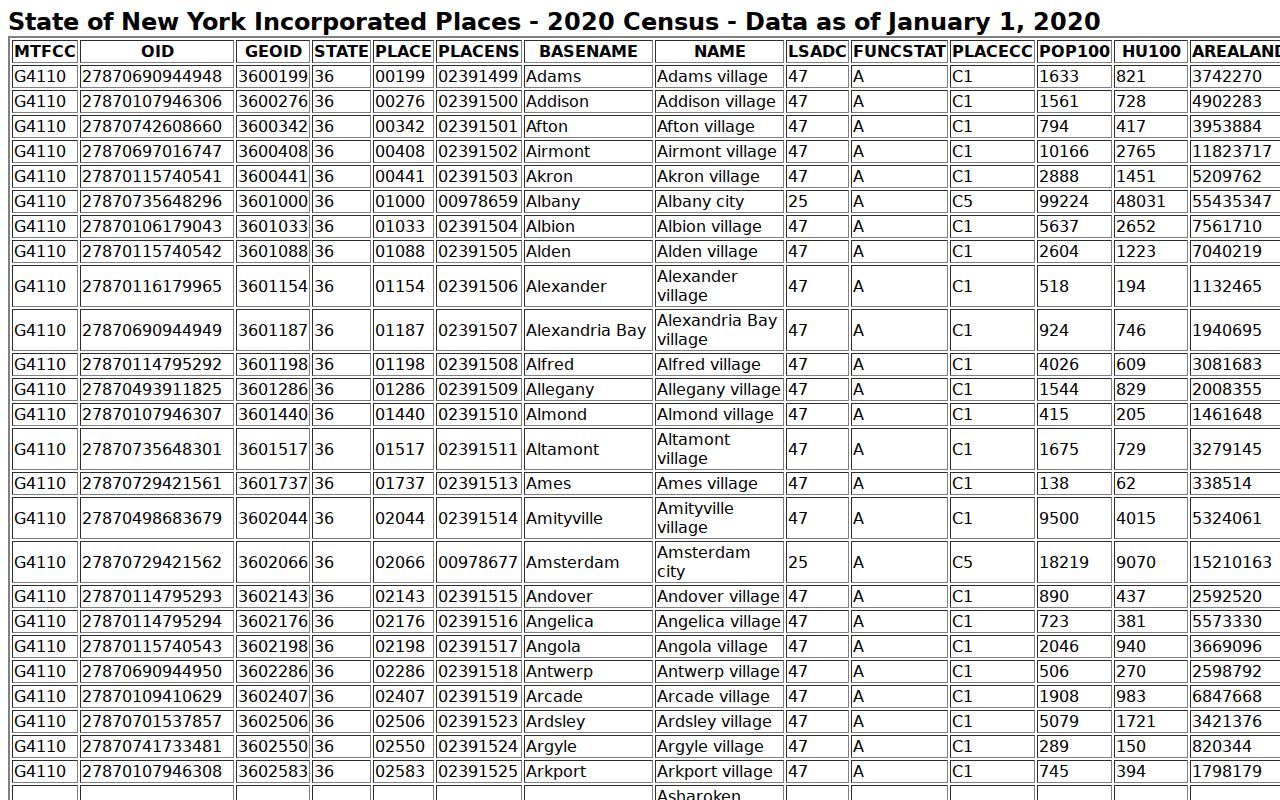
Local page rosters are no substitute for jurisdiction. Seneca County and village property records determine which office actually governs the parcel.
What Interlaken Property Records Show and Their Limits
Interlaken property records pull many threads together. A parcel, an assessment owner, a recorded deed, a tax bill, and a permit request can all link up, and so can an old street name or an archive trail. The records have limits. They cannot make an occupant an owner, prove a permit was finished, or turn a tax line into a survey. A deed gap stays a gap without support. Date each source, and keep the parcel number at the center.
The Seneca County search workflow covers the portal mechanics. This village page layers on Interlaken material: Farmerville names, the Lodi-to-West Avenue change, railroad and fire history, and routes into local archives.
Lawful use. Interlaken property records support due diligence and history, but they are not a title search and must never be used to harass anyone.
Use an Interlaken Two-Name, Two-Street Search
Start with the current wording. Search Interlaken and West Avenue. Then run Farmerville, Farmer, Farmer Village, and Lodi Street as a second pass. Write down the year attached to each name. Otherwise the two searches look like competing addresses. Add Main, LeRoy, Lake View, Clinton, and Knight streets when a directory or map places the parcel within the village grid.
For a former business or station-area parcel, search the business name, the owner, and any railroad or right-of-way terms separately. A directory may name the occupant. I2 names the deed party and any recorded easement. When a building lines up with one of the village fire dates, look for a newspaper item, photograph, permit, demolition record, assessment change, or Sanborn update tied to that address before describing damage or rebuilding.
A good archive request states the parcel number, modern and historical street names, approximate years, owner or occupant names, and wanted formats. Ask which office holds the item: the Historical Society, County Historian, library, village, town, or county. That question matters here. Village files often live in odd places. It keeps the absence of a public permit database from turning into a false claim that no local file exists.
Interlaken's small size raises the stakes on identification. A surname, a business name, a church, or a street can repeat across decades. It can point to different people or parcels. So demand the parcel or legal description first. Add a second control before linking an archive item to the property chain. A spouse, occupation, deed reference, map position, or date works well.
Keep modern and historic terms in separate columns. A search log then shows which results used Interlaken, Farmerville, or Farmer Village. It also shows West Avenue or Lodi Street. That discipline keeps a useful old term from being mistaken for the current official address.